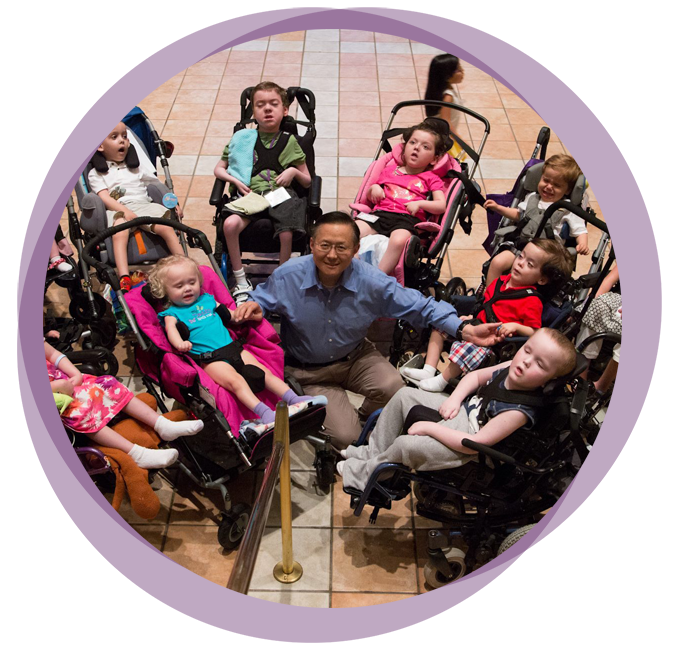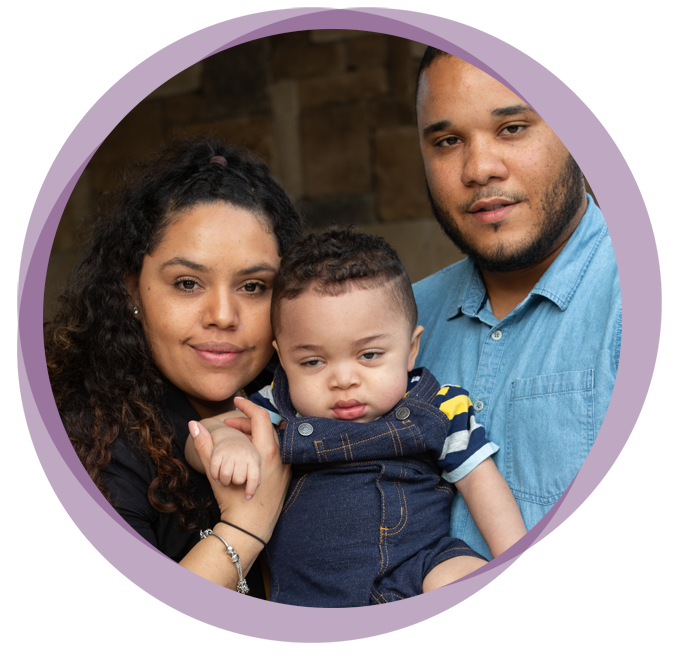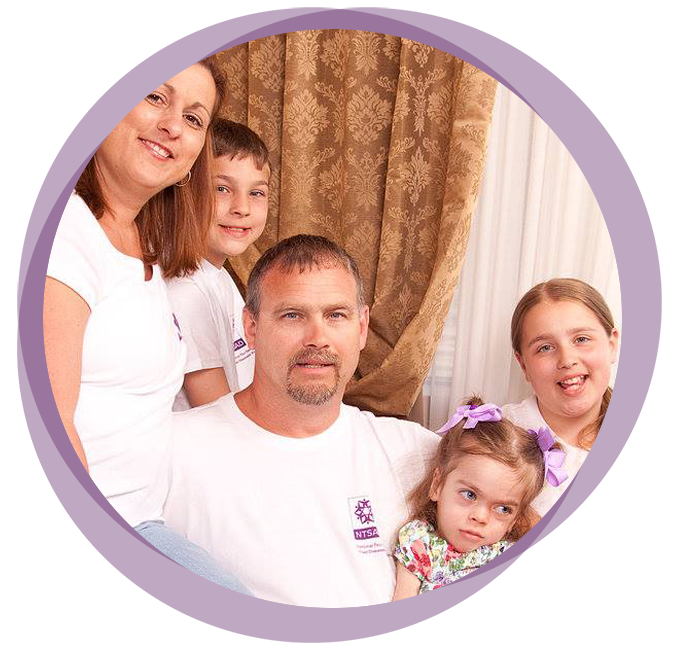

The Three Onset Levels of Sandhoff Disease
Sandhoff disease exists on a spectrum with three onset levels. When diagnosing the disease, healthcare providers will determine the onset level based on the age of the affected individual when symptoms first appear.
What is Sandhoff Disease?
Sandhoff disease is a rare lysosomal storage diseaseLysosomal storage disease is a group of disorders that affect specific enzymes. These enzymes normally break down items for reuse in the cells. If the enzymes are missing or don't work properly the items can build up and become toxic. More where the absence of two vital enzymesAccording to Genome.gov, an enzyme is a biological catalyst and is almost always a protein. It speeds up the rate of a specific chemical reaction in the cell. The enzyme is not destroyed during the reaction and is used over and over. More called beta-hexosaminidase A (HexA) and beta-hexosaminidase B (HexB) causes fatty substances to build up in the nerve cells, which damages the brain and spinal cord.
You might see it referred to as “GM2 gangliosidosis” or “GM2” in scientific literature.
There is currently no cure, but there are treatments and therapies to manage symptoms and maintain a baselineBaseline is a technical term for “the new normal” or how things looks when they are stable. With Tay-Sachs, Canavan, GM1 gangliosidosis, and Sandhoff diseases, the baseline shifts, and often it shifts down over time like steps, where each lower step represents a lower level of functioning. More of symptoms for as long as possible.
We’re Here to Help You
Getting a diagnosis can be overwhelming. It’s hard to know what to do first. Our Family Services Team is here to help. They’ll answer your questions, share information and invite you to connect with our caring and helpful Community.